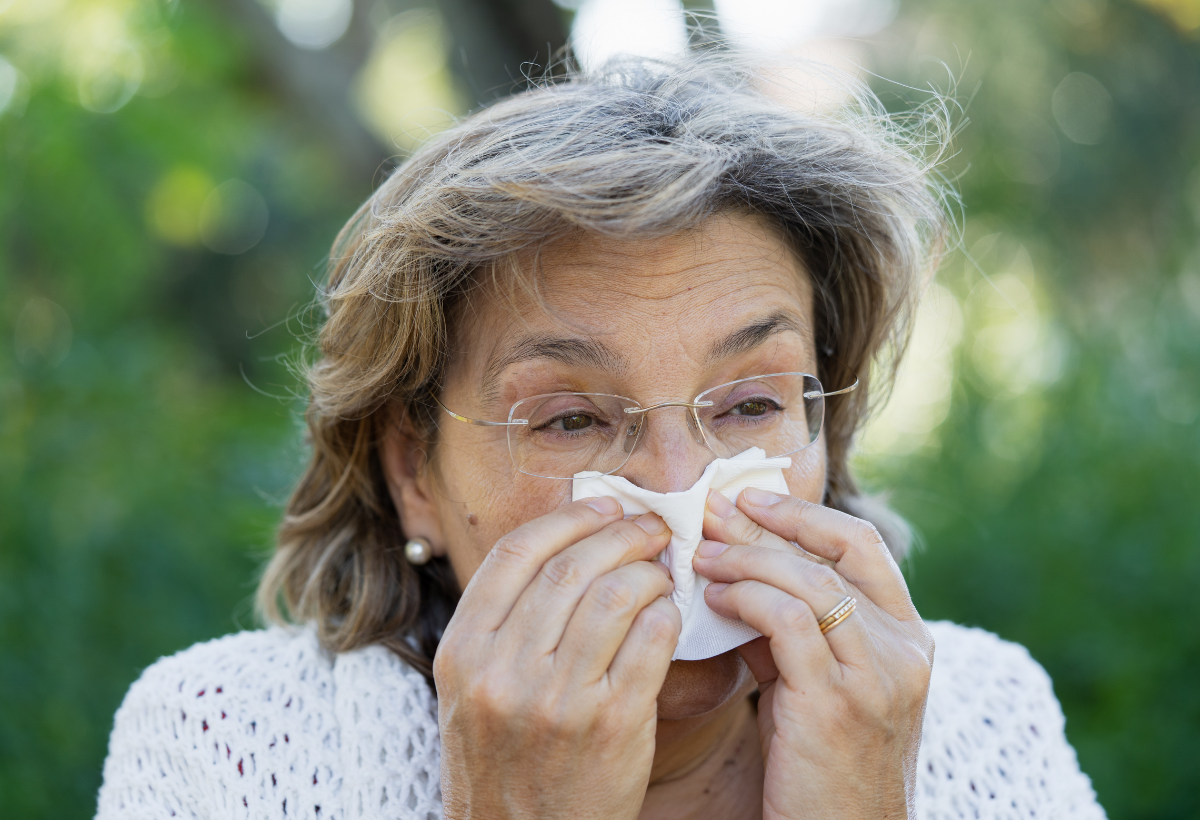
Spring is genuinely lovely until the pollen count climbs and every sneeze becomes something you tense up for.
If that tension is familiar, there's a clear physical reason for it.
And once you understand what's actually happening, the rest of this becomes a lot more useful.

Why Sneezing and Leaking Happen Together
Picture a garden hose lying on the ground, full of water.
Stamp on it hard and fast enough and water shoots out the end before you can stop it. Your bladder operates on a similar principle.
A sneeze contracts your diaphragm and abdominal muscles all at once, sending a sudden spike of pressure straight down through the core toward the bladder.
It happens in a fraction of a second.
Pelvic floor specialists describe the pelvic floor as a hammock of muscles and ligaments hanging between the tailbone and pubic bone, supporting the core and the organs that sit above the pelvis.
When that hammock weakens, the quick downward force of a cough or sneeze can direct unexpected pressure to the bladder and urethra, causing leakage. Bodyrestorationpt
Think of it like a trampoline that's lost some of its tension over the years.
A light bounce and it holds.
A sudden, heavy drop and it gives way.
The problem isn't the jump.
It's that the net has been stretched by childbirth, hormonal shifts, or simply a body that's been used hard for a long time.
This is stress urinary incontinence: the involuntary leakage of urine during activities that increase intra-abdominal pressure, such as sneezing, coughing, laughing, or exertion. NCBI
It affects more than one in three women. MedShun Most of them never mention it to anyone.
"Leaking with a sneeze, a laugh, or a jump is common, but common doesn't mean you have to accept it. It's a signal that the pelvic floor muscles need more support, not that something is permanently broken." — Pelvic Floor Physical Therapist, Southern Pelvic Health

Why Spring Specifically Makes It Worse
The sneezing alone is enough to tip the balance. But allergies do something else to the bladder that rarely gets mentioned.
When the body encounters allergens, it releases histamines. Beyond triggering sneezing and congestion, these chemicals can irritate the bladder lining directly, increasing sensitivity and contributing to urgency and more frequent urination. TREST Care
If the pelvic floor is the hammock, histamines are quietly loosening the ropes from underneath. The structure looks the same but it's already compromised before any pressure lands on it.
Pelvic health specialists note that seasonal allergies can increase sensitivity of the nerves going to the bladder, leading to increased bladder contractions and a heightened urgency to urinate, separate from the physical pressure of sneezing itself. Southern Pelvic Health
Research from Washington University found that when pollen counts exceeded a medium threshold, bladder symptoms flared by 22 percent in the one to two days that followed, with histamine-related nerve hypersensitivity suspected as the driving mechanism. Science Alert
So on a high-pollen spring day, the bladder is already on edge before the first sneeze arrives. Then the sneezing starts. By mid-afternoon the pelvic floor has been working overtime for hours, and the exhaustion that sets in has nothing to do with how much you physically did.
Suggested image: A woman outside, tissues in hand, looking weary but composed. Real. Not overdramatic.
What Actually Helps
1. Prepare the Bladder Before Peak Season
Regular pelvic floor contractions, three sets of ten daily held for roughly five seconds each, build the kind of muscle strength and endurance that reduces leaks when a sneeze catches you off guard. We Are Jude A well-trained pelvic floor is like a door with a good lock. The sneezes will rattle the handle all spring. The goal is making sure the lock holds.

Beyond exercise, natural bladder support is something more women are building into their daily routine. The Bladder Support Patches use transdermal delivery to bring botanically-derived ingredients including pumpkin seed, schisandra fruit, and cinnamon through the skin, working to calm overactive bladder signals and ease sudden urgency throughout the day. Up to 12 hours of steady support per patch, no pills, no routine disruption.
The goal isn't to stop the sneeze. It's to give the bladder a calmer baseline to work from when the sneezes come.
"What most women don't realise is that allergy season doesn't just increase how often they sneeze. It changes how their bladder behaves entirely. Managing both together, rather than just one or the other, tends to make a real difference." — Women's Health Physiotherapist
2. Your Skin Is Taking Damage Too
When leaks are happening regularly throughout a spring day, skin bears the cost quietly until it's already sore.
Imagine wearing a damp swimsuit for eight hours straight. That persistent moisture softens the skin, weakens its barrier, and makes even light friction irritating. Add a pad worn all day, continuous movement, and skin already thinned by hormonal changes, and by evening the discomfort is real.
When moisture sits against the skin for extended periods it weakens the skin barrier significantly. Friction from pads or liners worn throughout the day compounds that damage, particularly when skin is already sensitive. purivon
Spring accelerates this because you're out longer, moving more, and further from home. More activity means more friction. More time away means fewer opportunities to change.

The Incontinence Skin Barrier Film creates a breathable, invisible layer over sensitive skin before any of that starts. Think of it as a raincoat for your skin. It doesn't stop what's happening around it. It just means the weather can't get through. Alcohol-free, fast-drying, and lasting up to 72 hours per application.
3. Wear What You Actually Want To Wear
Spring means lighter fabrics and less forgiving cuts. For women managing leaks it also means clothing anxiety peaks, where getting dressed starts to feel less like a choice and more like a risk calculation.

The Leak-Proof Underwear removes that calculation entirely. Cut to look and feel like regular underwear, it absorbs leaks discreetly before they reach outer clothing. No bulk, no announcement.
It's the difference between going to a spring gathering wondering what might happen, and simply going.
4. Don't Let It Steal Your Sleep Too
Here's the part most women don't connect until someone points it out.
A full allergy day stacks exhaustion from the morning. Managing leaks, bracing for sneezes, tracking bathrooms, staying composed through all of it. By evening the body has been working since the moment you got up.
Then you wake up at 2am. And again at 4am.
Think of your legs like a sponge. All day, while you're upright, gravity slowly pulls fluid down into your lower legs. When you lie down, the sponge releases. That fluid moves back into circulation, the kidneys process it, and the bladder fills faster than it should. You wake up before you were ready to.
A study in the Journal of Urology found a direct correlation between how much fluid accumulated in patients' legs during the day and how many times they needed to get up to urinate at night. VIM & VIGR
A 2022 pilot study found that after four weeks of daytime compression stocking use, nighttime urination frequency decreased significantly and hours of uninterrupted sleep increased by close to an hour on average. PubMed
"Nocturia is often blamed entirely on the bladder when fluid redistribution from the legs is actually the primary driver. Wearing compression socks during the day is one of the simplest and most overlooked interventions for reducing nighttime trips to the bathroom." — Continence Specialist, National Association For Continence

The Compression Socks apply gentle graduated pressure during the day that limits how much fluid pools in the lower legs in the first place. Less accumulation means less releasing at night. Which means fewer interruptions to sleep that, after a day like this one, the body has already more than earned.
A Few More Things Worth Knowing
Reconsider your antihistamine. Some older antihistamines carry anticholinergic effects that worsen bladder function. Newer non-drowsy options such as loratadine, cetirizine, or fexofenadine tend to be considerably gentler in this regard. We Are Jude If leaks noticeably worsen on allergy medication days, raise it with your GP.
The pre-sneeze squeeze. Just before a sneeze arrives, a quick firm contraction of the pelvic floor, as if picking up something small, can provide enough resistance to reduce or prevent the leak. Pelvic floor therapists call this the Knack technique. It takes a few weeks to become reflexive but the results are worth the practice. The Down There Doc
Elevate your legs in the afternoon. Even fifteen minutes with your feet slightly raised before dinner squeezes the sponge earlier in the evening, so less fluid shifts at 2am.

Spring Can Be Yours Again
The pollen will return every year. What doesn't have to return is the bracing, the bathroom mapping, the quiet background stress of navigating a spring day around a bladder that feels like it's running the show.
Each physical process described here has a logical explanation and something practical you can do about it. Start where it makes most sense for you.
Share:
In Women’s Month, We Celebrate Every Body — Not Just the Perfect Ones
Botox, Slings, and Bladder Procedures: The Side Effects Women Should Understand First