
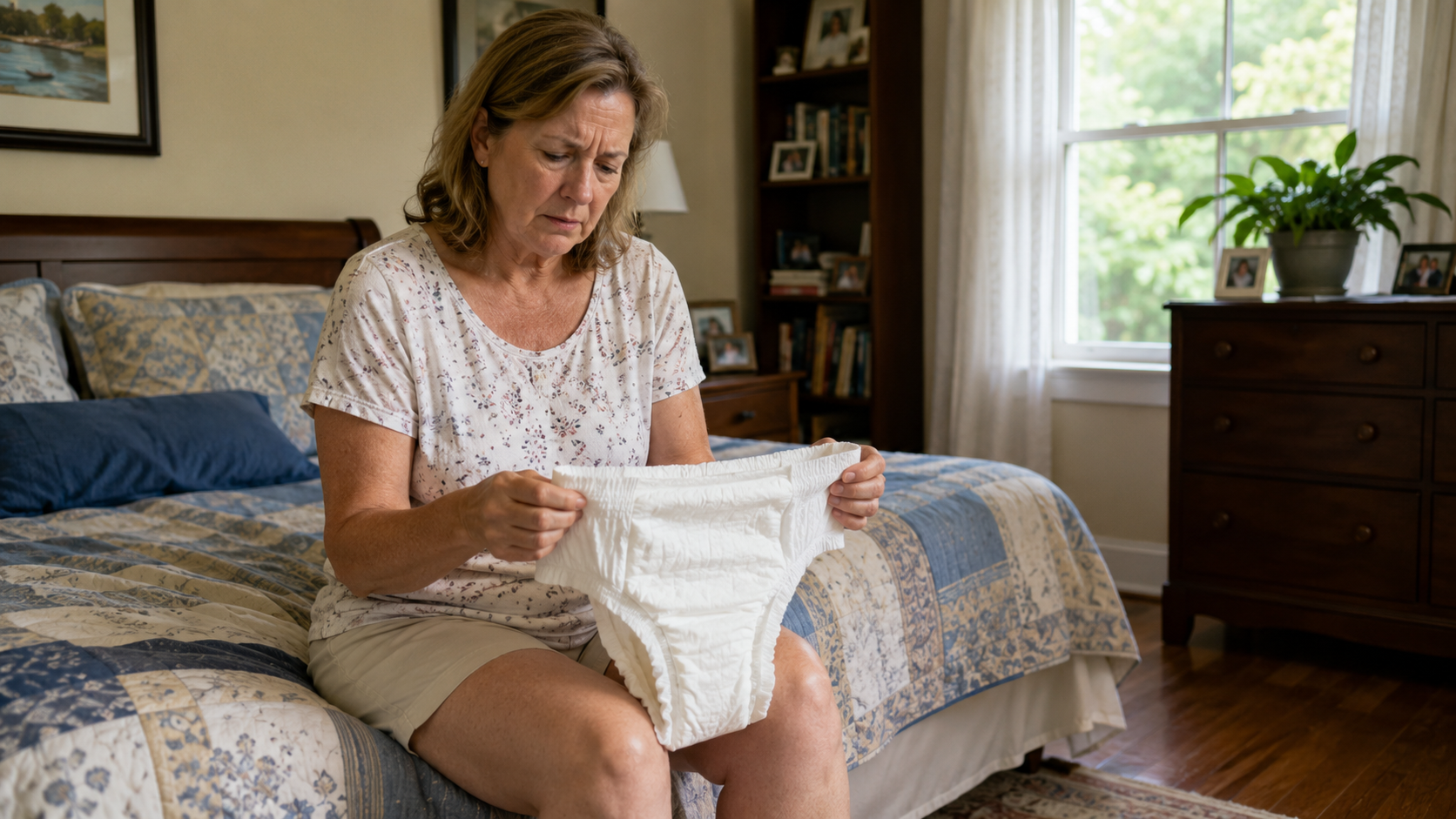
If you’ve noticed your bladder symptoms feel worse after the holidays, you’re not imagining it.
Many people experience a flare in urgency, frequency, or leaks once the celebrations wind down.
And while it can feel discouraging, especially if symptoms felt more manageable before, there are very real, explainable reasons this happens.
This isn’t your body “failing.”
It’s your body responding to a perfect storm of diet changes, stress, and disrupted routines.
Think of your bladder like a smoke alarm.
During the holidays, the kitchen fills with steam.
Nothing is wrong with the alarm, it’s simply reacting to the environment around it.
Let’s break down what’s really going on, and what you can gently do to help your body settle again.

Holiday Diet Changes Can Irritate the Bladder
During the holidays, many people consume more foods and drinks known to irritate the bladder.
Research consistently shows that caffeine, alcohol, acidic foods, artificial sweeteners, and spicy meals can irritate the bladder lining and increase urgency and leakage.
A large review published in BMC Women’s Health highlights diet as a modifiable factor influencing urinary symptoms in women.
Dr. Mallika Marshall, a physician affiliated with Harvard Health, explains it simply:
“Certain foods and drinks can act like irritants to the bladder, making symptoms worse even if the bladder itself hasn’t changed.”
By the time routines return, the bladder may feel overstimulated, like a muscle that’s been poked one too many times.
What you can do
-
Gradually reduce caffeine instead of quitting overnight
-
Take a short break from alcohol to let the bladder calm down
-
Focus on water, herbal teas, and non-citrus fluids
-
Keep a simple food log to notice patterns
 Some people also find gentle, plant-based support helpful during this reset period.
A herbal bladder support blend, designed to calm irritation and support urinary comfort, can be a useful addition while dietary triggers are reduced.
 Stress and the Nervous System Play a Bigger Role Than You Think
The holidays are often emotionally charged.
Even joyful moments come with planning, social pressure, disrupted sleep, and travel fatigue.
Stress activates the sympathetic nervous system, the body’s “alert mode.”
When this system stays switched on, bladder urgency can increase.
A study published in Neurourology and Urodynamics found a strong association between psychological stress and worsening lower urinary tract symptoms.
Stress doesn’t directly cause leaks, but it lowers the threshold at which urgency appears.
Pelvic health specialists often describe it this way: a stressed nervous system keeps the bladder on a shorter fuse.
What you can do
-
Practice slow breathing when urgency hits
-
Try a few minutes of relaxation before bed
-
Reduce mental pressure by simplifying goals
-
Remind yourself that healing happens in calm, not panic
 Support tools that work quietly in the background, such as bladder control patches, can also help during this phase.
These patches use transdermal delivery to provide steady, gentle support without pills, helping calm bladder signals while the nervous system resets.
 Disrupted Routines Affect Bladder Habits
During the holidays, routines often disappear.
Sleep schedules shift.
Bathroom habits change.
Exercise pauses.
Hydration becomes inconsistent.
Bladder function relies heavily on rhythm.
When that rhythm disappears, symptoms can increase.
The International Continence Society emphasizes that bladder training and routine consistency are key components of managing urinary symptoms.
Imagine your bladder like a toddler.
It thrives on predictable schedules.
When routines vanish, confusion follows.
What you can do
-
Return to consistent bathroom timing during the day
-
Rebuild gentle movement like walking
-
Re-establish regular sleep and wake times
-
Resume pelvic floor exercises if recommended

For some, combining routine rebuilding with daily bladder leak support supplements can provide additional reassurance during this adjustment period, especially when consistency is still returning.

Heightened Body Awareness Can Amplify Symptoms
Another reason symptoms can feel louder after the holidays is attention.
Once the busy season ends, many people become more aware of bodily sensations.
This heightened focus can amplify sensations that were already present.
Cognitive behavioral research shows that increased symptom monitoring can intensify perceived severity, even without physical changes.
This doesn’t mean symptoms are “in your head.”
It means attention acts like a volume knob.
What you can do
-
Notice symptoms without judgment
-
Avoid constant checking or bracing
-
Focus on overall trends rather than single days
Supportive tools are meant to lower that mental volume, not replace healing.
When the mind feels safer, the body often follows.

A Gentle Reset Supports Recovery
The good news is that this post-holiday period offers clarity.
Small, supportive changes can make a meaningful difference.
Research consistently shows that non-invasive strategies, including pelvic floor training, lifestyle adjustments, stress reduction, and supportive care, improve quality of life for people with urinary incontinence.
Progress doesn’t require perfection.
It requires consistency and kindness.
Practical Reset Checklist
-
Identify and reduce key bladder irritants
-
Rebuild simple daily routines
-
Prioritize sleep and nervous system calm
-
Resume pelvic floor exercises if appropriate
-
Use supportive tools without guilt
-
Track improvements weekly, not daily
 A Final Word
Bladder leaks flaring after the holidays are not a setback.
They are feedback.
Your body is responding to changes in diet, stress, and rhythm.
With patience, support, and time, symptoms often settle as balance returns.
As pelvic health clinicians often remind patients:
“The bladder is adaptable.”
This season isn’t about fixing everything at once.
It’s about creating an environment where healing feels possible again.
Share:
A Realistic Guide to Travelling With Urinary Incontinence This Holiday
Over 40% Quit Their New Year’s Resolutions by the End of January. Here’s Why You Shouldn’t Quit Your Pelvic Floor Training